The Nigerian National Petroleum Company Limited (NNPCL) is focused on boosting the country’s oil production to 2 million barrels per day (bpd) by 2027, as the current output is at 1.63 million bpd.
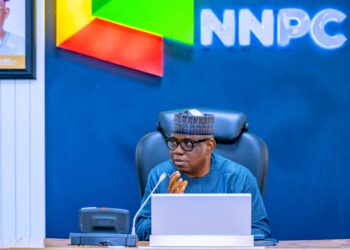
This announcement was made by NNPCL Group Chief Executive Officer, Bashir Bayo Ojulari, during the 9th OPEC International Seminar in Vienna on Thursday.
He also pointed out the aim to increase gas production from 7 billion cubic feet per day to 10 billion cubic feet by 2027. Ojulari mentioned that Nigeria’s high operating costs, which are between $25 and $30 per barrel, are due to years of investment in security; however, he noted that pipeline availability has now reached 100% thanks to better surveillance and community involvement.
“To support our production growth goals, we plan to raise oil production capacity to 2 million barrels per day and increase gas output from 7 billion to 10 billion cubic feet per day by 2027, with even more growth expected after that.
“The expansion project has already started. In March of this year, we reached a production level of about 1.56 million barrels per day. Right now, we’re at around 1.63 million, including condensates, and we’re optimistic about hitting 1.9 million barrels per day by the end of the year,” the statement partially shared.
He backed OPEC’s strategy to accelerate the release of additional oil into the market, describing it as a wise decision to maintain equilibrium between supply and demand despite ongoing global tensions.
Even though investments in the energy transition have been put on hold and the progress in renewable energy isn’t moving as fast as we hoped, the GCEO noted that global energy demand remains strong.
Ojulari recognized that results have been mixed, citing challenges with old infrastructure and outdated technology. He revealed that NNPCL is currently reviewing its refinery strategy, looking at options like partial or full divestment.
The Executive urged for more equitable access to global energy funding. He criticized the Global North for “weaponizing finance” against Africa while pretending to promote climate policies, emphasizing the critical need to tackle energy poverty throughout the continent. He pointed out that reliance on high-emission fuels such as wood and charcoal presents significant health hazards, particularly for women and children, and stressed the need for fairer global energy partnerships.