


By Kevin Okunzuwa, News Agency of Nigeria (NAN)
Although discussions about decentralised policing date back decades, Nigeria’s worsening insecurity has thrust the issue back to the centre of national discourse.
Historically, policing in Nigeria was regional during the colonial era, with the Northern, Western, and Eastern regions each operating their own police forces.
After independence in 1960, the regional police structure remained but gradually began to centralise.
Available record shows that following the 1967–1970 civil war, the Federal Government merged regional forces into a single Nigeria Police Force (NPF) to prevent local forces from fuelling separatist movements.
By the 1970s, the NPF had become heavily centralised under the Federal Ministry of Police Affairs and the Inspector-General of Police.
However, early calls for state police persisted, particularly from minority groups who felt the centralised structure was unresponsive to local realities.
Today, with insecurity escalating nationwide, those calls have grown louder.
Between 2023 and 2024 alone, no fewer than 10,217 people were killed in attacks in Benue, Edo, Katsina, Kebbi, Plateau, and Sokoto States.
A recent report by the National Human Rights Commission (NHRC) highlighted 570 deaths and 278 kidnappings in April 2025 alone, prompting an urgent call for independent investigations and prosecutions.
NHRC Executive Secretary, Dr Tony Ojukwu, warned during the Commission’s monthly human rights dashboard presentation that Nigeria was facing a deepening human rights crisis driven by widespread violence and displacement.
“The killings in Plateau and Benue, along with resurgent attacks in Borno and Yobe, have left hundreds dead and injured,” he said.
The alarming trend has strengthened support for state police, with proponents arguing that the centralised policing model has outlived its usefulness.
They canvass the view that a decentralised approach was essential for responding to region-specific security challenges.
Northern leaders, comprising governors of the 19 northern states and traditional rulers, recently reaffirmed strong support for the rapid establishment of state police.
They insisted that decentralising the nation’s policing system was now essential to tackling the worsening insecurity across the region.
The position was conveyed in a communiqué of views expressed at a high-level meeting in Kaduna.
At the meeting leaders warned that Nigeria’s centralised police architecture could no longer cater for a population exceeding 200 million people, especially with vast ungoverned territories exposed to criminality.
They declared that the time had come for states to have a say in their own security, arguing that the current centralised system was overstretched and ill-equipped to address Nigeria’s mounting crises.
Among voices in support of state police is former Kaduna State Governor, Nasir El-Rufai, who has long advocated for state police, repeatedly criticising the federal police structure for failing to adequately address insecurity in northern Nigeria.
In 2018, he argued that the “current number of policemen in the country is grossly inadequate.”
In 2020, he reiterated his stance, asking: “Has the recent crisis not exposed the inadequacy of the numbers, ordinance, training and unitary structure of the police in a federation?”
Oyo State Governor, Seyi Makinde, has also been vocal.
In January 2024, he described state police as “an idea whose time has come”.
He said shat states had been forced to create alternatives such as the Amotekun Corps after their requests for state police were previously denied.
Makinde believes that community, neighbourhood, and state policing should coexist with federal policing as seen in other federal nations — provided states received adequate funding from the Federation Account.
Former Delta Governor, Sen Ifeanyi Okowa, had also supported decentralised policing.
During the 2021 Zonal Public Hearing on Constitution Review, he called for devolution of powers, noting that the Exclusive Legislative List was “too burdensome for the Federal Government”.
He argued that state police would address regional security challenges more effectively and referenced other countries that operated dual policing systems.
In 2022, he added that state police would help enforce anti-open-grazing laws and reduce crime.
Similarly, former Ebonyi Governor and current Minister of Works, David Umahi, supported state police to tackle region-specific threats, particularly violent separatist activities in the South-East.
Traditional institutions have also weighed in.
The Oba of Lagos, Rilwan Akiolu, has repeatedly supported state policing as a means of enhancing local security.
Civil society, professional bodies and think tanks have similarly lent their voices to the establishment of state police.
Within civil society, the Nigerian Bar Association (NBA) has shown growing interest.
In November, a position paper presented under its Human Rights Institute described the national policing model as overstretched and insufficiently responsive to local realities.
While acknowledging the promise of decentralised policing, the NBA noted that its viability depended on strong institutions, transparency, accountability, and sustainable funding.
The Centre for Democracy and Development has also advocated for decentralised policing as part of broader security-sector reforms.
In spite of mounting support, significant opposition remains.
Former President Muhammadu Buhari was one of the most prominent critics, warning that state police could be misused by governors for political purposes, potentially militarising local politics.
Former Attorney-General of the Federation, Abubakar Malami, also opposed the idea, arguing that it would undermine national unity and risk abuse by state officials.
“Look at the way they treat local government; imagine what will happen if they control the police,” he said.
Other opposing groups include the Police Service Commission (PSC), Amnesty International Nigeria, the Socio-Economic Rights and Accountability Project (SERAP), labour unions, and various opposition parties.
Amnesty International expressed concern that state police could worsen human rights abuses in states with poor governance records.
SERAP warned that without strong legal safeguards, decentralisation could lead to discrimination, political intimidation, and weakened accountability.
The Police Service Commission argued that while it was not against state police, logistical challenges, training gaps, and coordination issues could create uneven standards across the country.
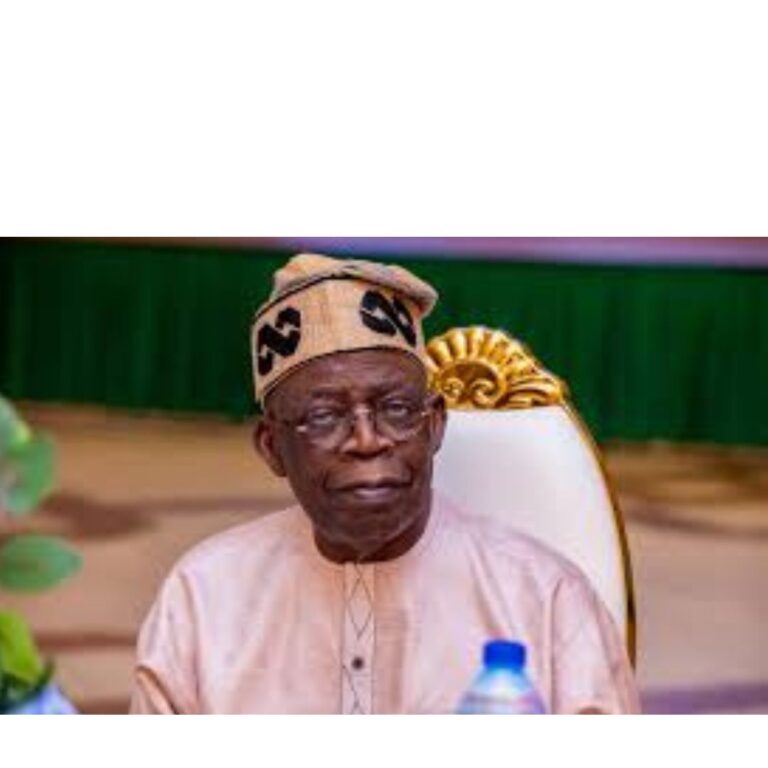
Recently, governors of the ruling All Progressives Congress (APC), under the Progressive Governors Forum (PGF), pledged to support President Bola Tinubu’s efforts by strengthening community-based security, intelligence gathering, conflict-prevention measures, and assistance to victims of violence and disasters.
The Forum’s chairman, Gov. Hope Uzodimma of Imo, hailed the President’s handling of security challenges, pointing out that the re-engineering in the security architecture of the country by the President was in order.
Uzodimma said the PGF resolved to support the President’s effort by continuing to strengthen community-based security initiatives, intelligence gathering, conflict-prevention mechanisms and support for victims of violence and disaster.
While the debate over state police continues, one fact remains undeniable: both supporters and opponents agree that Nigeria’s insecurity has reached alarming levels.
In general, policy analysts say finding common ground—one that balances security needs with safeguards against abuse—will be crucial for any meaningful progress.