
Pastor Tunde Bakare, Founder of Citadel School of Government (CSG) and Gov. Babajide Sanwo-Olu have called for regional economic integration that would usher in growth and prosperity for Nigerian states.
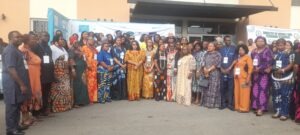
They made the call at the “Geo-Economic Optimisation Summit” convened by the Citadel School of Government (CSG) on Saturday in Lagos.
The News Agency of Nigeria (NAN) reports that the theme of the summit is: “From South -West Nigeria To The Globe: Lagos State As A Geo-Economic Hub”.
In his Keynote address, Sanwo-Olu said that Lagos is investing heavily in mass transit across road, rail and water; and placing climate resilience at the center of its planning, as a coastal city must; and digitising public administration, from internal processes to the services its citizens touch every day.
According to him, geo-economics is the deliberate use of economic instruments trade, investment, infrastructure, finance, technology and talent to project influence and to secure prosperity in a world where geography and economics can no longer be separated.
He noted that in a competitive world, places that prosper would be those that
command strategic position, dependable infrastructure, sound institutions and capable people.
“Africa, home to the youngest population on earth and to the largest free trade area in the world, sits at the very center of this story. And within Africa, Lagos stands at the fulcrum.
“Lagos is a sub-national economy that carries the weight of a nation. We contribute roughly a third of Nigeria’s Gross Domestic Product, and we are Africa’s second-largest metropolitan economy behind only Cairo with output in excess of 259.75 billion dollars on a purchasing-power-parity basis.”
The governor affirmed that the state belonged fully to the South West and would continue to engender genuine regional integration amongst the states.
‘The next circle is the nation itself. As Nigeria’s commercial and financial nerve center, and its busiest gateway for trade and investment, Lagos carries a responsibility that reaches far
beyond its own borders.
“When Lagos works, Nigeria works the
better for it”, he added.
He said that the state would continue to press the case for a “special status” designation for Lagos, grounded in our history as a former federal territory, in our strategic importance to the national economy, and in the immense burdens we carry as home to a tenth of Nigeria’s people.
“We believe Lagos deserves that recognition, and we will continue to seek a constitutional provision to guarantee it”, he said.
He reiterated that Lagos remained open to investors and ready to partner with individuals, private sector, South West and the world at large.
Across the South-West and the wider nation: let us think regionally, act strategically, and cooperate generously, for no single state captures the whole prize alone.
“From this South-West corner of Nigeria — standing on the shoulders of our geography, our people and our institutions, Lagos intends to take its rightful place, not at the margins of the global economy but among its hubs,” he added.
In his address, Founder and Board Chairman of CSG, Pastor Tunde Bakare, said that Lagos State provided the context for the CSG engagements on geoeconomic optimisation.
“Lagos state is a pointer to what works—a model of what could be emulated, a demonstration of what is possible and what could be improved upon.
“Lagos is Nigeria’s most economically viable state and a model of progressive continuity in development planning and execution throughout the Fourth Republic so far.
“From the administration of President Bola Ahmed Tinubu to that of Sanwo-Olu, Lagos state offers a compelling basis for national reflection and dialogue.
“Lagos story is one of ongoing geoeconomic success, demonstrating how strategic vision, institutional continuity, and sustained investment can transform a subnational entity into a globally relevant economic hub.
“More importantly, it points to what is possible across Nigeria’s geopolitical and geoeconomic zones, inspiring the emergence of multiple centres of prosperity capable of connecting the nation to vibrant regional and global economic blocs.
Bakare noted that Lagos served not merely as a success story but as a proof of concept for creation of several world-class economic hubs across Nigeria’s six potential “Dubais” in the making, each drawing on the unique strengths and comparative advantages of its region.
“That is why we are honoured to have Mr Governor, Babajide
Sanwo-Olu (CON), the Executive Governor of Lagos State, as our keynote speaker at this maiden summit to unpack the geoeconomic hub that Lagos models from Southwest Nigeria to the globe.
“While this is the maiden edition, the
vision will see us engaging one state at a time; one governor at a time, showcasing what works and the intra- and inter-regional collaborations that can accelerate national development.
“That is the essence of the Geoeconomic Optimisation Summit,” he added.
Speaking on the topic, “From South -West Nigeria to the Globe: Lagos State As a Geo-Economic HUB” Prof. Sunday Adebisi, Executive Director of the University of Lagos Business School (ULBS) said that Lagos state
has the commercial DNA and geographic advantage to lead the pace for growth.
“What Lagos must now build, with deliberate intent and institutional partnership, is the knowledge architecture capable of governing a city of 25 million people, a continental trade gateway, a maritime logistics hub, and a global technology capital simultaneously.
“The path from South-West Nigeria to the globe runs through an ecosystem of talent, institutions, infrastructure, and governance whose components must now be deliberately assembled,” he said.
According to him, Lagos is no longer just Nigeria’s commercial capital; it is the geoeconomic engine of West Africa with global ambitions.
“The Lagos GDP is projected to hit ₦73.15 trillion this year”, he said.