


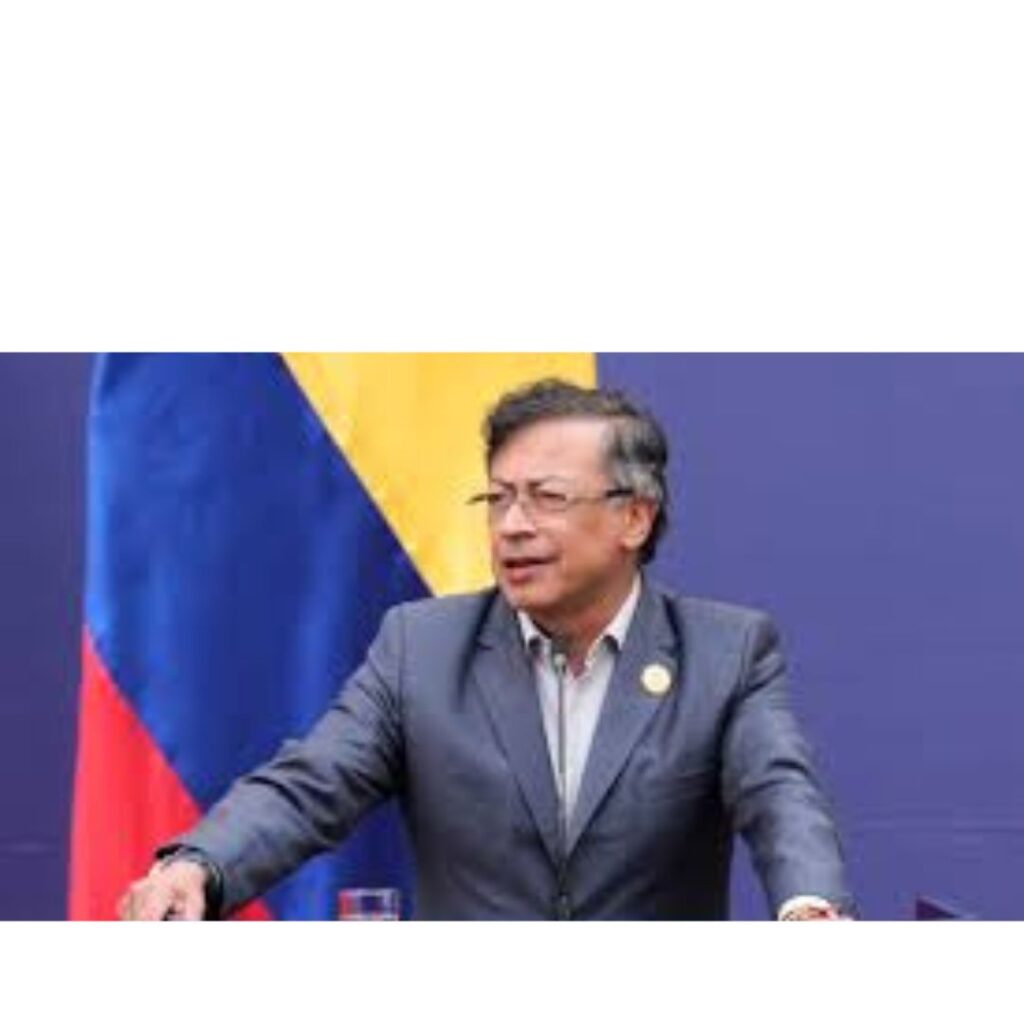
Colombia’s President Gustavo Petro, who supports leftist policies, has expressed strong concerns about the U.S. military’s recent attacks on boats thought to be involved in drug smuggling. He argues that while these strikes are easy to carry out, they don’t really address the larger problem of drug trafficking and calls them illegal.
In the last two months, the U.S. government has reported at least ten attacks on such vessels, with two occurring off Colombia’s Pacific coast just this week. The most recent strike happened overnight, when U.S. Defense Secretary Pete Hegseth announced that they targeted a boat used by a gang called Tren de Aragua, which he said was involved in drug trafficking in the Caribbean Sea.
Hegseth stated that six gang members were on the boat during the operation, which is notable because it was the first time such a mission was conducted at night. All six gang members were killed, and there were no injuries to U.S. personnel during the mission.
However, besides announcing these attacks, the U.S. military, along with the Trump administration, has not provided much information about how these operations were carried out, the intelligence that led to them, or who exactly was killed.
Colombian President Gustavo Petro has accused the U.S. military of causing harm to innocent people during its operations, claiming that these actions violate international laws. The White House has denied these claims, with President Trump defending the military strikes as a crucial part of his plan to combat drug trafficking.
When asked if he would consider calming tensions with Trump to discuss diplomatic solutions for stopping U.S. naval activities, Petro said that his responses have been a reflection of Trump’s confrontational approach.
The Drug Enforcement Administration reports that about 90% of the cocaine sold in the United States comes from Colombia. President Trump has openly criticized Petro, stating that his government has not been able to control the actions of local drug trafficking groups.
In an ongoing dispute, Petro said, “They have insulted me a lot, but all I can do is be honest.” He acknowledged Trump’s comments about Colombia being a major source of drugs. Recently, Trump described Colombia as a “drug den” and criticized Petro as a “lousy leader” and a “thug,” pointing out the record-high cocaine production in Colombia.
Cocaine production in Colombia has increased significantly in recent years, but President Petro believes that tackling this issue requires cooperation instead of relying solely on military force. He has invited Trump for a meeting at his presidential palace for a dialogue, and was adamant that Colombia did not receive a warning about the U.S. strikes.
The situation is unclear regarding the location of certain events, as not enough information is available. We don’t know if those involved were connected to cocaine.
Colombian President Gustavo Petro stated that targeting small boats with only a few crew members is a serious violation of international law, pointing out that at least 37 people have died because of U.S. airstrikes. This was mentioned before comments made by Hegseth about targeting six more people alleged to be involved in drug trafficking.
Petro made it clear that he doesn’t view those who died on the boats as criminals; instead, he sees them as workers in the drug trade. He explained that it’s easier to disrupt the workers than to make a real change in the drug trade without capturing the leaders running the operations.
He believes that larger drug shipments should be the main focus instead of small boats used for smuggling. Recently, former President Trump suggested that the strategy for fighting drugs might shift from the sea to land. On Thursday, the U.S. sent two long-range bombers close to Venezuela.
Petro expressed concern that U.S. military actions should not cross into Colombia, as this could lead to more violence and drive people to join insurgent groups. Reflecting on his own past as a member of an insurgent group, he warned that history shows when farmers are attacked, they often retreat to the mountains and take up arms.
“Having open conversations is much more beneficial,” he encouraged President Trump, who has threatened to halt all U.S. aid to Colombia.
Petro said that if that happens, his administration would look for ways to fill funding gaps, and he isn’t too worried about the threats of increased tariffs from the Trump administration.