


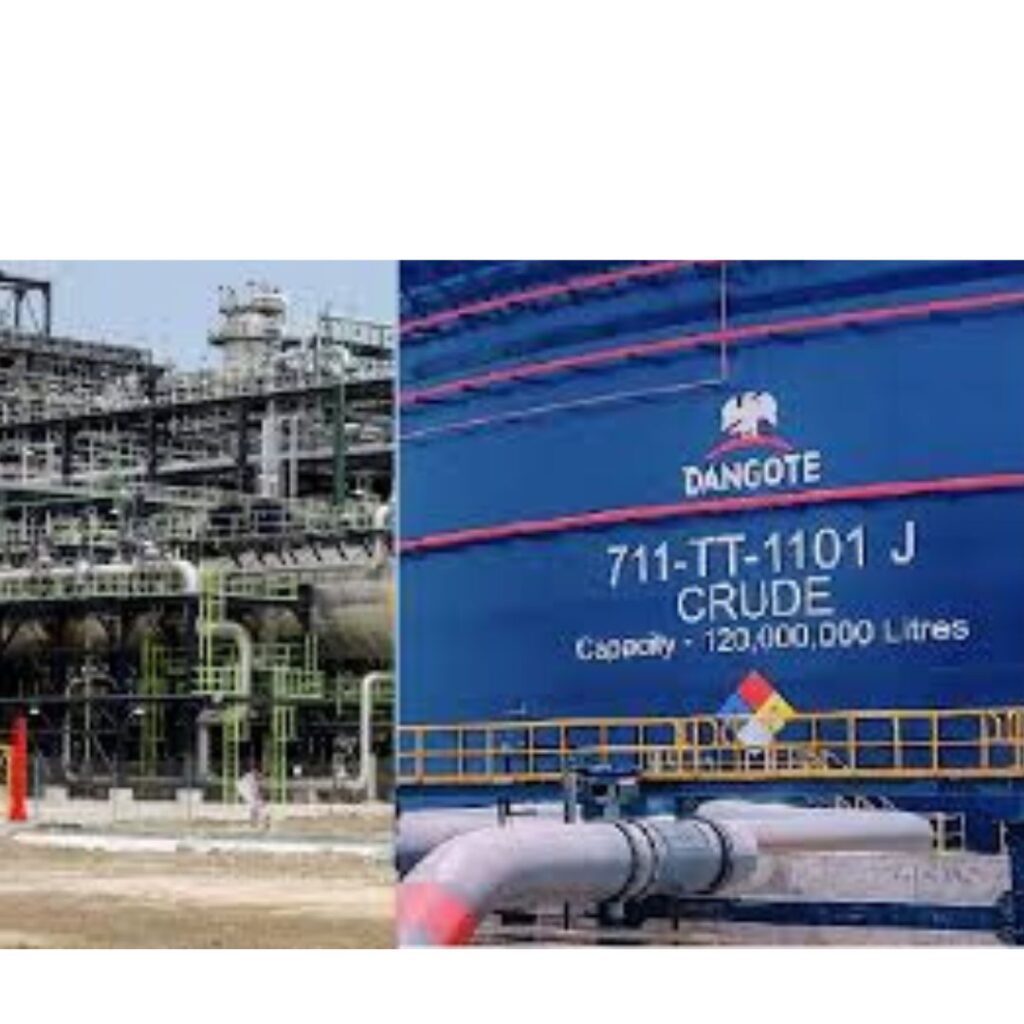
The Dangote Petroleum Refinery has reportedly reduced the amount of crude oil it purchases this month. This decision was made due to the refinery facing some challenges that are affecting its production levels. As a result, it is struggling to provide enough fuel to meet local demand.
Recent data shows that the refinery is expected to purchase less than 300,000 barrels of crude oil each day this month. This is more than a 50% drop from its highest purchase of 600,000 barrels per day back in July, and it’s also less than what the refinery can actually handle.
Experts warn that this situation could continue into next year, which might lead to limited fuel supply and higher petrol prices across the country. The report highlights that the amount of crude oil the refinery buys is crucial as it greatly impacts the availability of petrol in Nigeria.
The Dangote refinery, built with an investment of $20 billion and located in Lekki, has greatly changed oil markets in West Africa since it opened in 2024. However, it’s been facing some setbacks, including unexpected shutdowns and problems with staff during restructuring. Additionally, there have been outages at other refineries in Europe and the Middle East, which has contributed to rising gasoline prices recently.
Dangote’s gasoline unit has had several shutdowns this year, and it might need to close down again early next year for important maintenance work, as stated by the intelligence company IIR Energy.
Experts, including those from the consulting firm FGE NexantECA, are doubtful about the refinery’s ability to run at its best as it gets closer to 2026. Qilin Tam, who leads refining at FGE NexantECA, mentioned, “We believe it is likely that Dangote will keep facing problems next year, but not as much as this year.”
Unexpected shutdowns could create a positive feeling in the gasoline market, especially before the summer driving season. The plant’s residue fluid catalytic cracker unit was expected to restart this week after being offline since late August, according to IIR, which monitors operational issues.
IIR highlights that there’s still considerable work ahead on the gasoline-making unit, which may necessitate another shutdown in January. Neil Crosby, an analyst at Sparta Commodities, noted that European gasoline prices have surged recently, largely due to the ongoing challenges at Dangote’s refinery. These persistent issues could continue to prop up not only the European gasoline market but also lend some support to the distillate markets moving forward.
The report further revealed that this month, approximately 1.5 million barrels per day of feedstock will be supplied by the Nigerian National Petroleum Company Limited (NNPC) under a newly established naira-for-crude supply agreement. Looking ahead, NNPC is also poised to deliver a similar volume to Dangote in November, according to cargo allocations that Bloomberg has analyzed.
Since peaking in July, mainly due to a surge in oil imports from the United States, the amount of crude oil that the refinery is acquiring has decreased. This may suggest that the refinery isn’t operating at full capacity.
Traders have pointed out another sign that demand for imported oil is dropping: Dangote hasn’t placed any orders for West Texas Intermediate crude oil for November delivery yet.
However, there’s still a chance they could buy oil from the spot market at any time. A trader named Crosby noted that decisions on purchasing oil could change from month to month because of various challenges the refinery faces.
Experts from Wood Mackenzie Ltd. believe that the refinery’s operations should get better once these issues are sorted out.
If the refinery encounters more problems, it might have to process less crude, which could lead to lower-quality oil products being produced, rather than gasoline, according to Alan Gelder, a vice president at Wood Mackenzie.
This situation could lead to an increase in Dangote’s fuel oil exports to Asia, a country that consumes a lot of this product. At the same time, it would help ensure that European gasoline is available to West Africa, helping to address local shortages and supporting Europe’s refining industry.
According to reports, the refinery has been averaging around 3.94 million barrels of crude oil processed each day.
A senior official from Dangote Industries Limited declined to comment on the current situation or future plans for the refinery’s main gasoline unit.