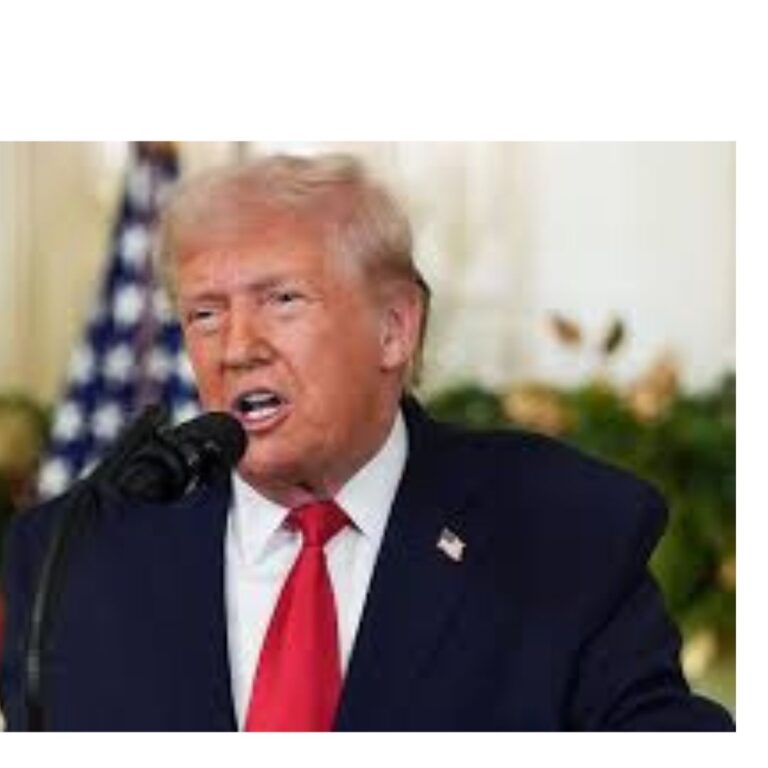



To avoid shutting down, the US government has agreed to approve a budget, but President-elect Donald Trump has not called for an increase in the federal borrowing cap in the hotly contested agreement.
The spending bill was officially signed into law by US President Joe Biden on Saturday morning. The deal was approved by the Senate by a vote of 85–11 just after midnight. Hours before, the House of Representatives passed it by a vote of 336–34.
Millions of government workers would have been left working unpaid or placed on temporary unpaid leave in the absence of a financial agreement.
About $36 trillion (£29 trillion) is owed by the US government, and interest payments alone now account for a larger portion of spending than US national security.
A shutdown would have resulted in the closure or significant reduction of public services such as parks, food assistance programs, and federally financed preschools, while limiting aid to farmers and individuals suffering from natural disasters.
Earlier this week, lawmakers successfully reached a deal to fund government agencies, but it broke apart after Trump and tech entrepreneur Elon Musk urged Republicans to reject it.
The last government shutdown occurred during Trump’s first presidential term in 2019 and lasted 35 days, making it the longest in US history.
The recently enacted American Relief Act of 2025 is 118 pages long, down from the 1,547-page bill that Trump and Musk rejected this week. It will maintain existing funding levels for the US government until March 14.
Trump’s request to raise the debt ceiling, which was a sticking point for Democrats and some Republican budget hawks, was not included in the final agreement, but Republican leaders said the legislation will be debated in the new year.
The dramatic budget battle foreshadows the legislative battles that may await Trump when he takes office next month.
“Trying to jam a debt ceiling suspension into the legislation at the 11th hour was not sustainable,” House Democratic minority leader Hakeem Jeffries said before of the vote.
He later welcomed the bill’s approval, writing, “House Democrats have successfully stopped the billionaire boys club.”
The agreement eliminates items sought by Democrats in the previous version of the bill, such as the first pay hike for MPs since 2009, healthcare changes, and provisions to restrict hotels and live event venues from using false advertising.
It does, however, include $100 billion (£83 billion) in disaster relief funding to assist with hurricane recovery and other natural disasters, as well as $10 billion (£8 billion) in farm aid.
It also includes full government money to reconstruct Baltimore’s Francis Scott Key Bridge, which collapsed after being damaged by a cargo ship in March.
Musk, who Trump has charged with reducing government spending in his administration, had strongly opposed an earlier version of the plan.
During the discussion, Republicans stated they were looking forward to a “new era” with Trump assuming office on January 20th and Republicans controlling both houses of Congress. Currently, the Senate is under Democratic control.
It is unclear if Republican House Speaker Mike Johnson will be able to secure a vote in the chamber on January 3rd to retain his position after he was beaten by the budget dispute and criticized by his party members.
“We appreciate that everyone rallied around us to do the right thing and having gotten this done now as the last order of business for the year, we are set up for a big and important new start in January,” Johnson stated to reporters following the vote on Friday.