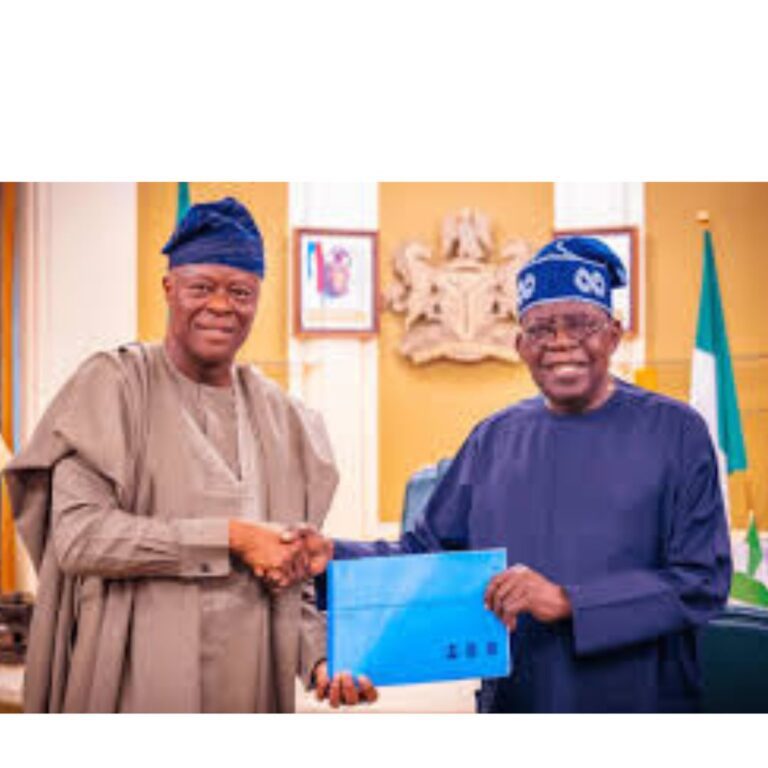
On Friday, President Bola Tinubu requested that power generation companies (GENCOs) allow the federal government additional time to complete the review and confirmation of the outstanding debts they owe.
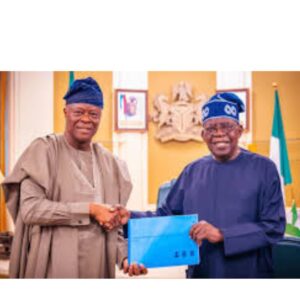
This appeal was made during a meeting with the Association of Power Generation Companies, led by Col. Sani Bello (rtd), at the Presidential Villa in Abuja.
The President assured them that his administration is committed to resolving the financial challenges in the power sector.
Mrs. Olu Verheijen, the Special Adviser to the President on Energy, announced that President Tinubu has granted early approval for a ₦4 trillion bond program aimed at addressing the financial shortfall in the sector.
President Tinubu acknowledged the old debts inherited from previous administrations and pledged transparency and fairness: “I accept the assets and liabilities of my predecessors, and there is no question about that.
“But that acceptance must be on credible grounds. I need to wear the audit cap of verifiability, authenticity, and the fact that this inheritance is not a mere deodorant but a support structure for critical economic and industrial promotion,” he stated.
The President emphasized that GENCOs and financial institutions must exercise patience, noting that government agencies are collaborating with audit and legal firms to verify the claims.
“We are here. So market it to your other colleagues. Give us time to do verification and validation of the numbers,” he urged.
While reiterating his belief in a market-driven electricity sector, the President pointed out that the long-neglected legacy issues within the industry are finally receiving the attention they deserve.
President Tinubu remarked: “This is a challenge we are actively tackling.
“I acknowledge the considerable savings we’ve achieved on fuel subsidies.
“We’ve introduced CNG as an alternative to ease the burden on the public.”
President Tinubu also highlighted the government’s dedication to fostering a stable investment climate and steering clear of drastic actions, like confiscating bank assets from generation companies.
“To our banking partners, I urge you to steer clear of foreclosures.
“Be meticulous in your evaluations, but keep an eraser close by. Let’s work together on this.”
Referring to electricity as “the most significant invention of humanity in the last thousand years,” the President underscored that access to electricity is vital for economic development and human dignity.
The President’s Special Adviser, Ms. Verheijen, pointed out that the liquidity crisis stems from “a mix of unfunded tariff deficits and market failures” that have accumulated over the past decade.
She stated that as of April 2025, the Federal Government is carrying a verified exposure of ₦4 trillion in debts to GENCOs, an accumulation dating back to 2015.
“We have since sat with 27 GENCOs—not all of them are here today—and reviewed their PPAs and gas sales agreements to understand the legitimacy of their claims.
“The GENCOs claimed about ₦4 trillion from 2015 to the end of 2023,” she said.
According to her, the Nigerian Bulk Electricity Trading Company (NBET)—the agency that contractually mediates between GENCOs and the government—has validated ₦1.8 trillion of these claims so far.
Since that time, we have accumulated ₦200 billion in subsidies that haven’t been paid which has become a debt for the federal government.
“As of April 2025, we are currently facing a total responsibility of ₦4 trillion,” she said.
However, Ms. Verheijen warned that this amount could be reduced after a final check.
“Although there is a planned approval for the ₦4 trillion bond program, it still needs to be discussed and agreed upon.
“Only the amounts that the federal government truly owes will be included in what the Debt Management Office (DMO) issues,” she explained.”
The Minister of Power, Chief Adebayo Adelabu, praised President Tinubu for his focus on the power sector, noting that the reforms implemented by the administration have rekindled investor confidence and enhanced performance throughout the electricity value chain.
“Your Excellency, your attendance at this meeting clearly demonstrates your steadfast dedication to the sustainability, stability, and long-term advancement of Nigeria’s power sector.
“Thanks to your leadership, we have achieved pivotal milestones in under two years,” the Minister remarked.
Adelabu mentioned that the Tinubu administration enacted the Electricity Act, 2023, which decentralizes and liberalizes the electricity market.
This was the first piece of legislation signed by the President after taking office.
He pointed out that the administration has introduced Nigeria’s first Integrated National Electricity Policy in 24 years to promote coherence in sector planning and execution.
He revealed that more than $2 billion in new private investment has been secured to enhance electricity access across the country.
Simultaneously, the sector’s annual revenue has surged by 70 percent—from ₦1 trillion in 2023 to ₦1.7 trillion in 2024—leading to a decrease in government subsidy obligations by over ₦700 billion.
He mentioned that the installed generation capacity has increased from 13,000 MW to 14,000 MW, achieving an all-time peak generation of 5,801 MW and a record maximum daily energy delivery of 120,370 MWh on March 4, 2025.
He stated that there has been no national grid failure in 2025, which is a direct outcome of the interventions made under the Presidential Power Initiative, contributing over 700MW of transmission capacity.
He highlighted significant advancements in reducing Nigeria’s metering gap through the ₦700 billion Presidential Metering Initiative, financed through FAAC, along with the World Bank-supported Distribution Sector Recovery Programme (DISREP), which has successfully delivered 300,000 smart meters out of the 3.45 million that were procured.
While recognizing these achievements, Adelabu warned that the sector is facing a critical liquidity crisis that could jeopardize the sustainability of ongoing reforms and investments.
“Mr. President, considering the serious consequences of this debt burden, including the risk of a nationwide shutdown of generation assets, I respectfully request your immediate assistance in addressing these obligations, even if only partially, over a specified timeframe,” the Minister requested.
He encouraged the President to persist in supporting structural reforms to create a resilient and financially stable power market.
In separate comments, business leaders Tony Elumelu and Kola Adesina called for urgent action to maintain operations and promote further investment in the sector.
“Mr. President, we’ve come to you as a last hope.
“The generating companies are deeply in debt to banks, and the threat of foreclosure is very real, not because we aren’t fulfilling our responsibilities, but because the system owes us trillions,” Elumelu expressed.
He praised the Tinubu administration for restoring the integrity of oil production and banking stability.
“Before you assumed office in 2023, we were losing 97% of our daily oil production. Now, we are retaining 98%.
“That’s transformation. Investors are witnessing greater stability and predictability,” he said.
On electricity, Elumelu added : “We don’t need power to complete your transformation, we need power to enable it.
“Power is critical to unlocking Nigeria’s full potential. We urge you to help solve this debt problem.”
Adesina reiterated the need for immediate liquidity support while raising concerns over gas supply shortfalls.
“Liquidity is the oxygen of our business. Without urgent intervention, generation capacity will stall, and Nigeria’s industrial and economic ambitions will be jeopardised.
“The plants in the Afam axis are underperforming because we have not paid gas suppliers.
“We propose unlocking 800 million cubic feet of gas through NLNG to boost supply to these power plants,” he said.
The meeting was attended by the Chief of Staff to the President, Femi Gbajabiamila; the Coordinating Minister of the Economy and Minister of Finance, Mr. Wale Edun; the Minister of Information and National Orientation, Alhaji Mohammed Idris; and other senior government officials, regulators, and stakeholders in Nigeria’s electricity industry.