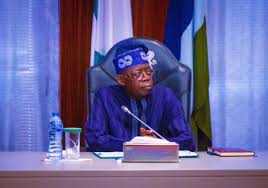



A Senior Advocate of Nigeria (SAN), Mr. Femi Falana, has raised constitutional objections to the newly proposed bill seeking to make voting compulsory for all eligible Nigerian citizens.
The bill, titled ‘A Bill for an Act to Amend the Electoral Act 2022 to Make it Mandatory for All Nigerians of Majority Age to Vote in All National and State Elections and for Related Matters’, was recently introduced by the Speaker of the House of Representatives, Rt. Hon. Abbas Tajudeen. It passed its second reading last week.
However, in a detailed legal review titled “Compulsory Voting Is Not Enough”, Falana contends that while the bill ostensibly aims to address voter apathy and encourage electoral participation, it fundamentally contradicts several provisions of the 1999 Constitution of the Federal Republic of Nigeria.
He warned that the bill, if passed in its current form, is likely to be declared unconstitutional by Nigerian courts.
“However, it is doubtful if the Speaker and his colleagues had paid sufficient attention to the relevant provisions of the 1999 Constitution,” Falana wrote.
“Otherwise, they would have realised that the compulsory voting is constitutionally invalid in every material particular on the ground that it is inconsistent with Sections 37, 38, 77(2), 135(5) and 178(5) of the Constitution.
“The said constitutional provisions protect the fundamental rights of the Nigerian people to privacy, freedom of thought and conscience as well as the freedom to register and vote in national and state elections conducted in Nigeria.”
He noted that since the provisions have been judicially interpreted by Nigerian courts, it is pertinent to refer to some of the cases for the guidance of the National Assembly members.
Falana supported his position by referencing several landmark Nigerian court cases reinforcing the fundamental rights to privacy and freedom of thought.
Falana, in a statement issued on Monday, argued that in Nwali v. Ebonyi State Independent Electoral Commission & Ors (2014) LPELR-23682, the Court of Appeal ruled that the use of open ballot voting, requiring voters to queue openly, was unconstitutional as it violated the right to privacy under Section 37. The court unanimously held that: “The appellant was entitled to the privacy of his decision to vote for a particular candidate… Compelling him to vote openly intrudes into, interferes with, and invades the privacy of his said decision… amounting to a clear violation of his fundamental right.”
Falana also cited the Supreme Court decision in Medical and Dental Practitioners Disciplinary Tribunal v. Okonkwo (2001), where the court upheld a patient’s right to reject medical treatment based on religious belief.
According to the statement, Justice Ayoola, delivering the leading judgment, stated: “The right to privacy implies a right to protect one’s thought, conscience or religious belief and practice from coercive and unjustified intrusion… a right not to be coerced into acting contrary to one’s religious belief.”
He continued, “Similarly, in Lagos State Government & Ors v. Asiyat AbdulKareem (2022) LPELR-58517(SC), the Supreme Court upheld the right of Muslim female students to wear hijabs in public schools, reinforcing the constitutional guarantee of freedom of religion and conscience under Sections 38 and 42.
“The ban on wearing of hijab violated the Muslim students’ rights to freedom of thought, conscience, religion… and freedom from discrimination,” the court ruled.
Falana argued that instead of mandating voting, the National Assembly should prioritise amending the Electoral Act to address more pressing electoral concerns.
He highlighted the legal ambiguity surrounding the use of electronic voting technologies such as the Bimodal Voter Accreditation System (BVAS) and the INEC Result Viewing Portal (IREV).
“In the Election Guidelines, it was stated that the BVAS machines and the IREV would be deployed to enhance the credibility of the elections,” he said.
“Even though INEC said that there were glitches in the transmission of results for the presidential election, the Supreme Court held that the use of BVAS machines and IREV were not backed by the Electoral Act and the Constitution.”
He called on lawmakers to urgently amend the Electoral Act to legally empower these innovations.
Furthermore, he recommended that the legislature incorporate the well-regarded proposals of the Uwais Electoral Reform Panel, including the unbundling of the Independent National Electoral Commission (INEC), introduction of proportional representation, timely resolution of election petitions, and the creation of an electoral offences commission.
“This ought to take precedent over the planned introduction of compulsory voting in the Electoral Act,” he stressed.
The SAN pointed out that enforcing compulsory voting in Nigeria poses practical challenges beyond the constitutional issues.
He said, “Apart from the possibility that compulsory voting may be declared illegal under the current political dispensation, it is practically impossible to prosecute millions of Nigerian voters who may decide to boycott national and local elections that have been reduced to the periodic renewal of the misgovernance, corruption and abuse of power by the pampered members of the political class.”
He acknowledged that while Section 14(2) of the Constitution supports the popular participation of citizens in the democratic process, any move to mandate voting must be accompanied by broader reforms.
He said, “The point that I am struggling to make is that by the combined effect of the relevant provisions of the Constitution, all political party and members of the executive and legislature are under a legal obligation to comply with the provisions of the Fundamental objectives and directive principles of state policy enshrined in chapter II of the Constitution.
“To that extent, compulsory voting cannot be legalized in vacuo”, according to Sahara Reporters.
“Since Section 14 (2) of the Constitution provides for the popular participation of citizens in the democratic process, compulsory voting is justified if Chapter II thereof is made justiciable,” he added.
He also pointed to Article 13(1) of the African Charter on Human and Peoples’ Rights, which Nigeria has domesticated. This article states that every individual has the right to participate freely in the government of their country.
“Therefore, citizens can be justifiably compelled to vote if the socio-economic rights of the Nigerian people set out in chapter II of the Constitution are made justiciable,” he added.