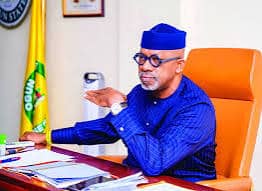

Vice President Kashim Shettima, Gov. Peter Mbah of Enugu, and Gov. Umar Namadi of Jigawa have called on the media to uphold responsible and professional reporting.
They said that responsible reportage would help to protect the integrity of the 2027 general elections and strengthen Nigeria’s democracy.
They made the call on Thursday at the 22nd All Nigeria Editors Conference organised by the Nigerian Guild of Editors (NGE) in Enugu, with the theme: “The Ballot, The Media and the Task of Keeping Democracy Alive.”
Shettima, who spoke virtually, said the responsibility of the media had become more demanding with the rapid development of artificial intelligence (AI), which could make false information appear genuine.
He urged editors and journalists to strengthen professional standards, fact-checking and verification mechanisms to detect and counter AI-generated disinformation before, during and after elections.
The vice president said government and the media might not always agree, stressing that democracy was strengthened when disagreements were based on facts, handled responsibly and conducted in good faith.
Shettima also said the reforms of the President Bola Tinubu administration were beginning to show improvements in different sectors of the economy, including agriculture, manufacturing, oil and gas and services.
He, however, acknowledged that the ultimate test of the reforms was their impact on the cost of living, purchasing power, jobs and the quality of life of Nigerians.
Shettima commended the NGE for sustaining the conference and providing a platform for discussions on issues affecting the survival and development of Nigeria’s democracy.
Mbah, the host governor, said government and the press had different responsibilities but should ultimately be guided by the public interest.
“Government must be transparent about what it is doing and be accountable for the results.
“The press must establish the facts and report the truth. Sometimes that truth will expose failure. Sometimes it will reveal progress,” he said.
Mbah said the media had a responsibility to independently scrutinise those in power, investigate claims, test evidence and report facts even when the findings were inconvenient.
He said the challenge had become greater because AI could produce convincing photographs, cloned voices and fabricated videos that could spread rapidly before journalists had the opportunity to verify them.
The governor urged journalists to go deeper in their investigations and called on editors to protect rigorous journalism and ensure that newsrooms distinguished between information that generated immediate attention and issues the public genuinely needed to know.
He also highlighted some of his administration’s projects in Enugu, including road construction and reconstruction, schools, primary healthcare centres, water supply, transport infrastructure and the development of Enugu Air.
Gov. Namadi congratulated the NGE for sustaining the All Nigeria Editors Conference as a platform for professional reflection, dialogue and promotion of ethical standards in journalism.
He said the media played a vital role in shaping public discourse, strengthening democratic governance, promoting accountability and advancing national development.
The governor said the threat posed by AI-driven disinformation was particularly serious ahead of the 2027 elections because of emerging technologies.
This, he said, could generate convincing text, images, audio and videos capable of misleading citizens and undermining confidence in electoral processes.
The governor further described editors as a critical line of defence for accuracy, fairness, balance, ethics and national responsibility, particularly in an era when false information could travel faster than verified facts.
Also speaking, the Minister of Information and National Orientation, Alhaji Mohammed Idris, said the quality of information available to citizens would be crucial as Nigeria approached the 2027 general elections.
The minister was represented by the Managing Director of the News Agency of Nigeria (NAN), Mr Ali Mohammed Ali.
Idris said democracy did not begin and end at the polling station, noting that citizens required credible information to make informed decisions.
He said the sub-theme of the conference, “When Lies Look Real: Detecting and Debunking AI Disinformation Before, During and After Election,” was particularly timely because AI could be used to create convincing photographs, videos, audio recordings and documents that were not genuine.
The minister urged editors to make verification an integral part of newsroom culture, asking journalists to establish who made a claim, whether the source was reliable, whether a video or photograph was original, and whether evidence supported the headline and stories.
Earlier, the NGE President, Mr Eze Anaba, said the media had a huge responsibility to nurture Nigeria’s democracy by helping to ensure that the ballot was credible and electoral outcomes were accepted by the people.
He said the ballot could only fulfil its purpose when voters were adequately informed, had access to credible information and were able to make their choices freely without intimidation or undue influence.
Anaba said editors were gatekeepers of much of the information that shaped public understanding, adding that their role had become more crucial in the era of social media, AI deepfakes, misinformation and rapid information dissemination.
The highlights of the conference included the unveiling of a book written by the NGE, entitled Truth, Trust and the Future of Nigerian Journalism, and the presentation of awards of excellence to Mbah, and John Cardinal John Onaiyekan, former Catholic Archbishop of Abuja, who was the keynote Speaker.

Vice President Kashim Shettima