
By Chuka Nnabuife
Walking into Governor Chukwuma Charles Soludo’s waiting room at the new Governor’s Lodge, Light House, Awka, feels less like entering an office and more like stepping into a living museum. White walls lined with enlarged dummy cheques and crafted souvenirs tell stories of affection and belief. Each cheque represents money freely donated by Anambra communities and individuals to support the governor’s development drive — and his second-term bid.
Together, these artifacts form a gallery of gratitude — a hall of fame where art, politics, and public trust converge. The display is not curated by Soludo the art lover, but by Soludo the reformer: every item symbolises a citizen’s endorsement of his governance style. The Governor’s Lodge has become a civic museum of a rare political moment in Nigeria — when the people insist on investing in a government that directly impacts their lives.
When asked how the unusual trend of citizens donating to his campaign began, Soludo chuckled. “Sincerely, I cannot tell how,” he said, recalling a moment during a campaign stop in a rural area when a tricycle rider broke through the crowd and handed him all the cash in his pocket. “Governor,” the man said, “this is all I have. Take it. I want to encourage you to continue the good work. Don’t look back.”
That spontaneous act, he believes, sparked a wave of donations that now define his campaign. “I can’t say exactly when it started, but it picked up so fast that almost every community now wants to be part of it. The number waiting for me to visit is overwhelming.”
Behind this groundswell lies what Soludo calls his “development hypothesis” — the belief that genuine investment in people’s wellbeing yields more political capital than populist giveaways.
Benjamin Disraeli once reasoned that “to govern is to convince.” That idea captures Soludo’s philosophy: persuasion through performance, not patronage through provision.
“When the campaign began, I said I wanted to test whether the politics of development could translate into votes,” he explained. “I don’t believe people must be bought with money or what they call ‘stomach infrastructure’. If you execute projects that truly touch their lives, they will support you. Once people understand how government impacts them, they will vote.”
This principle underpins his governance since taking office in 2022. Soludo’s Solution Government has consistently prioritised the poor, introducing policies that stimulate grassroots prosperity. During a Channels Television interview in March 2025, when asked whether his reforms still prioritised the poor, he smiled: “The welfare of the people has remained a constant in all our policies.”
He listed the initiatives: free education in public schools; free antenatal and delivery care in state hospitals; tax waivers for low-income traders and artisans; prompt payment of salaries and pensions; subsidised transport for civil servants. “We’re putting money back in the pockets of the poor,” he said, “not through handouts but through empowerment.”
When teased by a presenter, “Mr Governor, do we now call you a welfarist?” Soludo replied, “It’s not about labels. Governance must have a human face. Giving out bags of rice before cameras might look like welfarism, but it’s showmanship. The people eat today and go hungry tomorrow. We’re interested in helping them earn sustainably.”
As Václav Havel once put it, “Politics should be the art of uniting people, not the science of giving them gifts.”
Soludo’s reformist politics reflects that ethos — transforming politics from a trade of favours into a fellowship of purpose.
A clear example is Anambra’s agricultural revolution. Under a new government initiative, more than two million seedlings of oil palm, coconut, ogbono, and ugiri have been distributed to households across the state. Within four years, he predicts, many families will earn sustainable income from these crops. “That,” he says, “is how you put wealth directly in people’s hands.”
The results are tangible. Over 102,000 pregnant women have benefited from free delivery services. More than 13,000 youths have been employed in education and healthcare, while another 13,000 have been trained and empowered under the One Youth, Two Skills Solution (1Y2SS) programme.
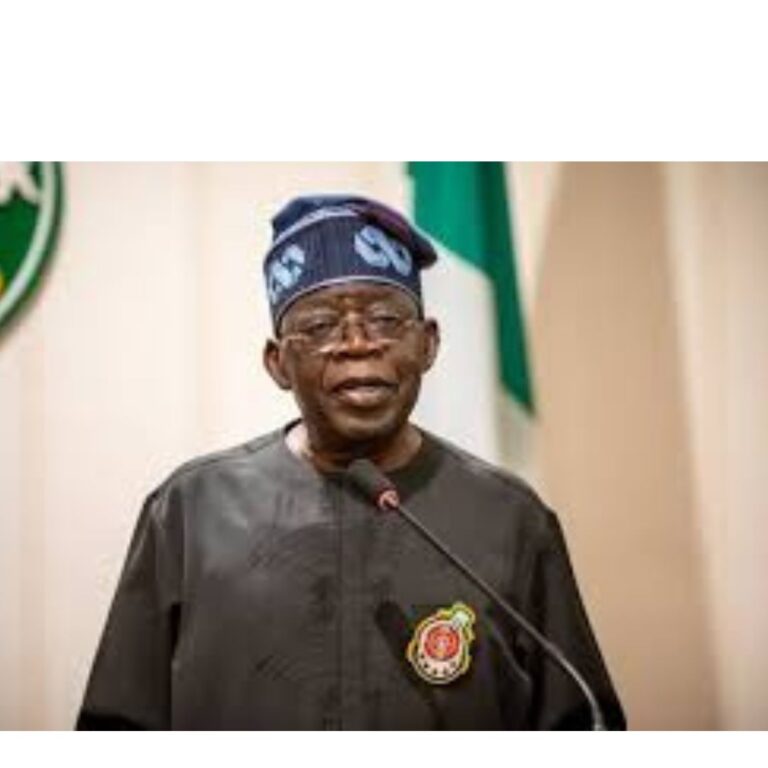
Soludo’s model stands out in a nation where politics is often dominated by giveaways and spectacle. When President Bola Ahmed Tinubu visited Awka in May 2025, the governor described his approach as “a reinvention of Awoism — massive investment in human capital — blended with M. I. Okpara’s palm and coconut revolution.”
It is, he insists, a politics built on productivity, not patronage.
In his essay Towards Sustainable Democracy and a Free-Market Economy in Nigeria, Soludo argued that handouts rarely change lives because “money can only buy so much.” True welfare, he maintains, tackles root causes and yields lasting results.
He often illustrates the point with a simple arithmetic. “Sometimes, I wish I could give every resident of Anambra ₦1 million each,” he said recently. “But if you share all the state’s monthly revenue — FAAC and internally generated funds — among our 8.5 million residents, no one would get more than ₦2,500. And from that amount, the government must pay salaries, pensions, build roads, and provide security. So, handing out cash cannot solve poverty. What works is creating systems that make people self-reliant.”
The governor often references Julius Nyerere’s insight: “When the people are involved in their own development, miracles happen; when they are treated as recipients, progress dies.”
Soludo seems to have taken that as creed — transforming dependency into shared purpose.
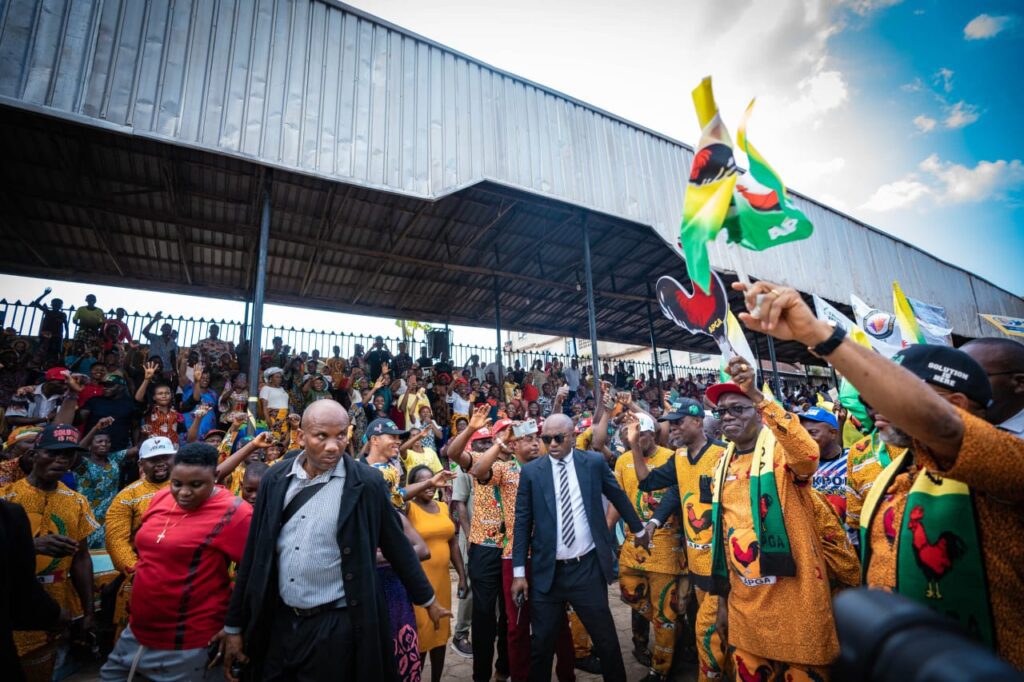
This conviction fuels his campaign, one where ordinary people — not political elites — are the donors and advocates. The gallery of cheques at the Governor’s Lodge is therefore not just decoration; it is a living document of a new political contract between leader and people.
Soludo says his inspiration springs from his late mother, Mgbafor, who sold akara by the roadside. “For that roadside pepper seller, hawker, or Okada rider,” he says, “even if we cannot immediately change their situation, we must ensure their children do not end up like them. That is our social agenda.”
The transformation of politics into a people-owned project is perhaps the boldest experiment of Soludo’s leadership. Across Anambra, markets, schools, and communities are taking ownership of projects that affect them. It is a shift from clientelism to citizenship — from dependency to dignity.
Critics who once dismissed his “development politics” as too academic now acknowledge its growing mass appeal. The spontaneous fundraising from ordinary people demonstrates a deeper emotional bond between citizens and government. As Soludo himself puts it, “It is not about propaganda. The people have seen roads, schools, hospitals, and opportunities. They know this government works for them.”
In a nation long accustomed to political handouts, Soludo’s approach challenges convention. It argues that the truest political investment is trust — and trust must be earned through performance. His campaign, fuelled not by billionaires but by bike riders, market women, and youth groups, represents a profound cultural shift in Nigerian democracy.
When asked if he fears the power of old-style money politics in the November 8, 2025, election, he smiled again. “We shall see,” he said. “Our people are wiser now. They know what works for them. They will not sell their future.”
The cheques in his waiting room, signed by citizens across towns and villages, may yet prove his point. Each one is a small pledge of faith — not just in Soludo the man, but in Soludo the idea: that governance grounded in productivity, accountability, and people’s empowerment can win hearts without buying them.
In an era when politics is too often reduced to slogans and spectacle, Soludo’s “politics of development” stands out as both pragmatic and principled. It reminds us that leadership is not measured by how much is distributed, but by how much is built — and how deeply the people believe in what is being built.
That is the hypothesis Professor Chukwuma Charles Soludo, global scholar and grassroots reformer, will test in the Anambra gubernatorial election of November 8, 2025.
- Nnabuife, Managing Director of Anambra State Civic and Social Reformation Office (ANCISRO), writes from Awka