
.Says Nigeria must invest in drones, cyber warfare, missile defence
Former Chief of Army Staff, retired Lt.-Gen. Tukur Buratai, has described President Bola Tinubu’s approval of the expansion of the Nigerian Army as a turning point in Nigeria’s national security architecture.
The News Agency of Nigeria (NAN) reports that Tinubu recently approved the expansion of the army from its current number of eight divisions to 12.
Buratai made the remarks on Monday in a paper titled ”A New Dawn for Nigerian Defence: The Strategic Expansion of the Nigerian Army to 12 Divisions”, made available to journalists in Abuja.
He described the approval as the most significant restructuring of Nigeria’s land forces in decades, saying it represents a strategic response to the country’s evolving security challenges.
According to him, the expansion underscores the Tinubu administration’s commitment to strengthening national defence and enhancing the operational effectiveness of the Armed Forces.
Buratai noted that the previous eight-division structure had become inadequate to address the range and complexity of contemporary security threats across the country.
He also said that the new structure would decentralise command and control, improve operational responsiveness, strengthen intelligence coordination, and enhance logistics, troop deployment and inter-agency collaboration.
The former army chief commended Tinubu for approving the recruitment of 28,000 additional personnel to support the expanded force structure, noting that the move would ease operational pressure on troops while creating employment opportunities for thousands of Nigerian youths.
He lauded the Chief of Army Staff, Lt.-Gen. Waidi Shaibu, for championing the restructuring initiative, describing the expansion as a demonstration of strategic foresight that would significantly enhance Nigeria’s capacity to combat terrorism, banditry, kidnapping and other security threats.
He said that the expansion would not only strengthen national security, but also reinforce democratic institutions.
According to him, a strong, professional and well-equipped military remains the ultimate guarantor of democratic governance, national unity and constitutional order, protecting the country against external aggression, internal subversion and other threats to national stability.
He added that citizens were more likely to embrace democratic values when they felt safe and adequately protected.
Describing the Nigerian Army as one of the strongest symbols of national unity, Buratai said its personnel were drawn from every ethnic, religious and regional background.
He added that the expansion would further strengthen national character and promote national cohesion.
He expressed confidence that the initiative would deepen democracy, foster national unity and guarantee lasting peace and stability.
Buratai urged Nigerians to support the military, stressing that security was a shared responsibility requiring collaboration among government, communities, the private sector and citizens.
He also appealed to state governments to provide land for barracks, training areas and other military infrastructure needed for the new divisions, while calling on the private sector to complement government efforts through investments in troop accommodation, logistics and welfare.
According to him, a more secure Nigeria would provide the enabling environment for economic growth, infrastructure development and sustainable national prosperity.
Meanwhile, Buratai, has called for greater investment in drones, cyber warfare, missile defence and other emerging technologies to prepare the Nigerian Army for future conflicts.
Buratai made the remarks in a paper titled “A New Dawn for Nigerian Defence: The Strategic Expansion of the Nigerian Army to 12 Divisions,” which was made available to newsmen on Monday.
He said future warfare would increasingly depend on technology, making force modernisation critical to national security.
According to him, the ongoing expansion of the Nigerian Army should be complemented with the acquisition of advanced weapons and technological capabilities.
He identified intelligence, surveillance and reconnaissance drones, precision strike systems, electronic warfare and cyber defence as priority areas.
Buratai also advocated investments in advanced communication systems, armoured platforms, engineering equipment and logistics assets.
He said consideration should be given to establishing specialised formations with capabilities in missile defence, drone warfare, cyber operations and information warfare.
According to him, these domains represent the future of armed conflict and require early investment.
The former army chief said the acquisition of modern force multipliers would transform the Nigerian Army into a more technologically capable and information-driven force.
He urged the Federal Government to sustain investments in force modernisation to ensure the military remained ahead of emerging threats.
Buratai said technological superiority would enhance precision, reduce casualties and improve operational effectiveness across all theatres of operation.
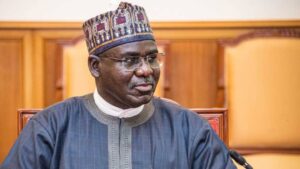
Retired Lt. -Gen. Tukur Buratai