


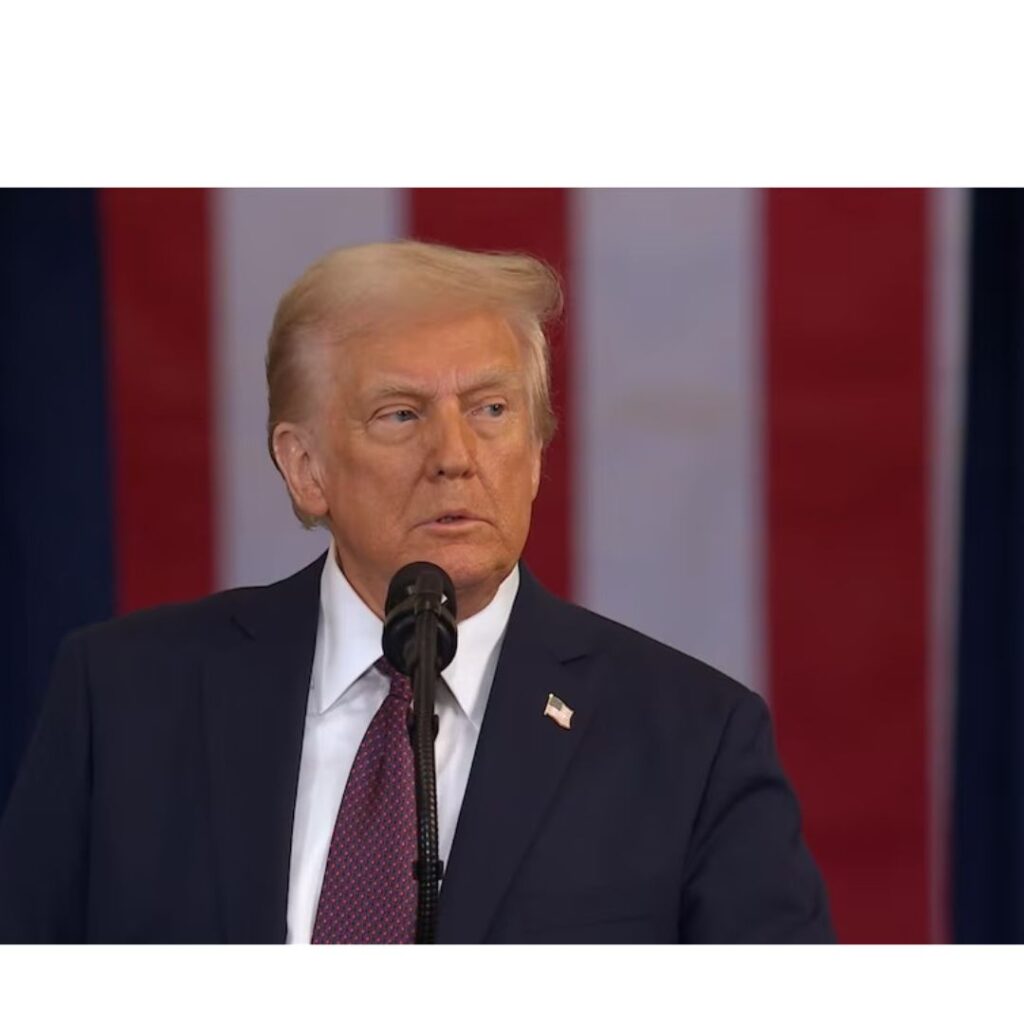
The President Donald Trump-led United States government has announced that it will soon begin requiring bonds of up to $15,000 from Nigerians and other tourist and business visa applicants, under its new pilot programme set to take effect on August 20, Reuters reports.
This was announced in a notice released on Monday. The U.S. government said the initiative aims to deter visitors from overstaying their visas.
The policy gives U.S. consular officers discretion to demand bonds from travellers originating from countries with high overstay rates or where the U.S. deems screening and vetting procedures insufficient.
According to the Federal Register notice, visa applicants may be required to pay bonds of $5,000, $10,000, or $15,000, with officers generally expected to impose at least $10,000.
Countries like Angola, Liberia, Mauritania, Sierra Leone, Nigeria, Cabo Verde and Burkina Faso — all with visa overstay rates above 10 percent in 2023 will prominently be affected.
“The funds will be returned to travellers if they depart in accordance with the terms of their visas,” Reuters quoted the notice as stating.
The pilot programme, which will run for approximately one year, revives a similar initiative launched in November 2020 during the final months of President Trump’s first term.
The earlier attempt was shelved due to the global slowdown in travel amid the COVID-19 pandemic.
Trump, who made curbing illegal immigration a central theme of his presidency, has consistently pushed for tougher entry requirements.
In June, he issued a travel ban that fully or partially blocks citizens of 19 countries from entering the U.S. on national security grounds.
Many of those same countries are also marked by high visa overstay rates.
A spokesperson for the State Department said countries subject to the new visa bond policy will be identified based on a combination of factors.
“Countries will be identified based on high overstay rates, screening and vetting deficiencies, concerns regarding acquisition of citizenship by investment without a residency requirement, and foreign policy considerations,” the spokesperson reportedly said.
While the government could not estimate the exact number of applicants who may be affected, the U.S. Travel Association projects the scope to be limited.
“The scope of the visa bond pilot program appears to be limited, with an estimated 2,000 applicants affected, most likely from only a few countries with relatively low travel volume to the United States,” the group said.
Countries potentially impacted include several on the existing travel ban list, such as Chad, Eritrea, Haiti, Myanmar, and Yemen, as well as others in Africa with high overstay rates, including Burundi, Djibouti, and Togo, based on the U.S. Customs and Border Protection data from fiscal year 2023.
In a separate development, a new provision in a sweeping spending bill passed in July by the Republican-controlled Congress will introduce a $250 “visa integrity fee” for all approved non-immigrant visa holders.
The fee, which takes effect October 1, is potentially refundable for those who comply with visa rules.
However, critics warn the mounting costs could deter legitimate travel.
“If implemented, the U.S. will have one of, if not the highest, visitor visa fees in the world,” the U.S. Travel Association warned.
The dual measures come amid broader efforts by the Trump administration to overhaul the U.S. immigration system and reduce visa abuse.
But with international travel still recovering, tourism advocates say the policies risk further alienating global travellers.