

As governance, peace, law, and order gradually reestablish themselves in Rivers State, businesses and commercial activities are stabilizing, which in turn fosters economic growth in the region. Recently, the National Assembly established a 20-member ad hoc committee with the responsibility of overseeing and critically evaluating the performance and achievements of the emergency rule in the state.
The primary objective of the committee is to ensure transparency, accountability, and effective governance throughout the six-month emergency rule in the state.
The suspension of democratic governance by President Bola Tinubu, approved by the National Assembly, was intended to address the political deadlock that has persisted for nearly two years in Rivers State. This deadlock has disrupted governance, undermined democratic institutions, jeopardized security, and weakened the economic and social fabric of the state.
The crisis has created divisions among the population and brought about an uncertain future. These are challenges that Nigeria cannot ignore. In the meantime, an uneasy calm has descended upon the state, affecting economic activity and investment, and creating panic and uncertainty among residents.
However, the President’s decisive action to declare a state of emergency and the subsequent appointment of a sole administrator, Vice Admiral Ibok Ette Ibas (rtd), was aimed at ensuring stability, protecting the lives of residents, restoring peace, and allowing economic activities to thrive.
Upon assuming office, the administrator sought the cooperation of all stakeholders, including elders, political leaders, traditional rulers, faith leaders, youth, women, the media, and civil society, to assist him in achieving his mission.
Ibas emphasized that he did not come as a partisan figure or as a competitor in the political landscape. Rather, he was appointed as a servant of the state, entrusted with the serious responsibility of restoring peace and order, enabling Rivers State to rise above its political turmoil and reclaim its esteemed position as the oil and gas capital of Nigeria.
To address serious political issues, the president took the initiative to declare a state of emergency. Therefore, the government must impose harsher sanctions to address the situation when law and order deteriorates to the point where state assets, such as oil facilities, are targeted by aggression.
To ease the concerns of the citizens, the sole administrator reached out to different political groups with the aim of uniting supporters, encouraging them to put aside their grievances and rivalries to work towards the bright future of a new Rivers State.
The aim of declaring a state of emergency is to promote dialogue between the two opposing factions, allowing them to address the consequences of rising political unrest that threatens to destabilize governance.
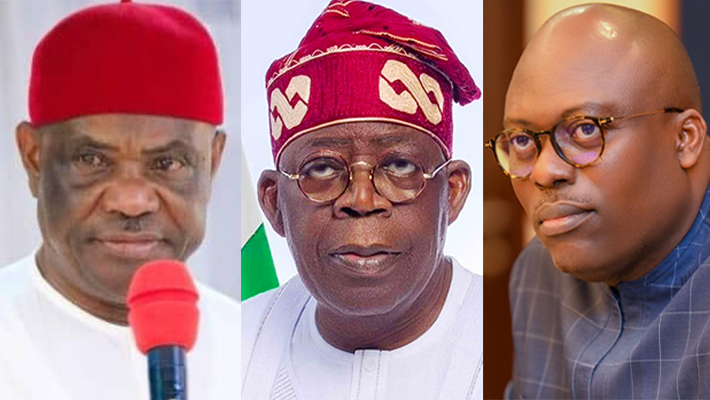
The suspension of Governor Fubara, as well as his efforts to reconcile with his political Godfather, FCT Minister Nyesome Wike, are notable. Fubara has also advised his political supporters to refrain from participating in any unapproved protests or rallies in his support. According to Wike, who has also expressed his wish to participate in the peace negotiations, suspended Governor Fubara must first contact Rivers State’s political leaders in order to engage in a comprehensive and polite conversation.
This situation illustrates how emergency rule shifted the political views of key figures who had previously rejected any form of negotiation. Given that such destructive actions no longer represent the region, the sole administrator advised against the destruction of national infrastructure under the guise of protests.
Nonetheless, the obstacles facing the state can only be overcome through unity, collaboration, and forward-thinking, especially among political stakeholders and elders from various political alliances in the state.
It is evident that people now acknowledge the harm inflicted on our national infrastructure, which was executed under the pretense of protest, is an issue that the Niger Delta region has decisively moved past.
Therefore, it is really important for everyone to come together and promote awareness to reject violence, seeing it as a way that leads to destruction and economic ruin.
Political violence takes away the government’s ability to gather enough resources for important infrastructure and services, and it also holds back the progress of reforms in different sectors.
As a result, the young people in the region need to resist the temptation to go back to the bad times of militancy. Instead, they should choose to talk things out and engage sincerely, which has always been a good way to solve problems and conflicts of any kind.
Over time, the sole administrator has restored civil rights and promised that basic human rights will be respected and protected. However, it is important to recognize that those who try to disrupt the economic stability of Rivers State, along with the national infrastructure and institutions in the state, will not be allowed to succeed.
The sole administrator has made it clear that there is no tolerance for lawlessness. There will be no acceptance of violence, and no patience for actions that threaten our shared well-being. “The government will not act without reason, but it will not hesitate to enforce the law when needed. Let it be clear that it will maintain justice and fairness to ensure that civil order is kept,” Ibas stated.
He remarked that the security council held meetings where reports are gathered from the leaders of security agencies within the state. He emphasized that he reviews various reports, initiatives, and issues, providing clear guidance on the necessary actions to be taken.
I have specifically charge them to uphold neutrality, honor citizens’ rights, and do everything within their power to maintain law and order, while collaborating to ease tensions when dealing with state adversaries. “We need to progress with a strong sense of urgency to develop a feasible plan that guarantees the efficient operation of every government agency. The departments tasked with serving citizens and residents are fulfilling their responsibilities and cooperating with stakeholders as directed by Mr. President.
“I ask for your understanding and support. Most importantly, I encourage you to have faith in the possibility of a better future, one based on peace, stability, and shared progress,” he said.
Ibas has always commended the President for the trust he has shown in him and for giving him such an important national duty.
“I will use my training, knowledge, experience, and dedication to make sure that the essence of this significant decision is achieved. I will need to work closely with the National Assembly, under Mr. President’s guidance, and I hope to keep counting on their support and cooperation throughout this assighnment.”