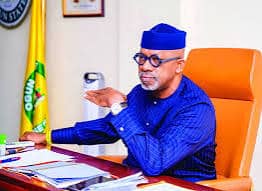

Professor Nentawe Yilwatda has been appointed as the new national chairman of the All Progressives Congress (APC) after a consensus agreement reached late at night by President Bola Tinubu and APC governors.
His official nomination followed the resignation of Abdullahi Ganduje, who stepped down due to health issues. The APC National Executive Committee (NEC) is anticipated to confirm Yilwatda’s appointment later today in Abuja.
At 56 years old, Yilwatda offers a strategic blend of academic, bureaucratic, and electoral expertise for this position. He is a former INEC Resident Electoral Commissioner and was the APC’s 2023 governorship candidate in Plateau State, currently serving as Minister of Humanitarian Affairs.
This appointment is part of a carefully thought-out plan by the ruling party to change its approach and direction. Yilwatda, a Christian from the North-Central region, is viewed as the perfect counterbalance to the APC’s Muslim presidential ticket. Insiders within the party noted that his religious background, youthfulness, and clean record were key factors in his selection.
“We required someone who embodies both generational and regional balance—he meets those criteria,” stated a senior APC official.
The party’s zoning arrangement allocated the chairmanship to the North-Central region, which includes Plateau, Benue, Kogi, Kwara, Nasarawa, and Niger states. Yilwatda’s connections to Plateau and his prior electoral experience gave him an edge.
Before entering politics, Yilwatda lectured in engineering at the Federal University of Agriculture, Makurdi, and played a high-stakes electoral role at INEC between 2017 and 2021—overseeing sensitive polls in Benue, Osun, Rivers, Cross River, and Anambra.
His rise through the ranks of the APC has been rapid. After leaving INEC in late 2021, he joined the APC and quickly became its 2023 gubernatorial flagbearer in Plateau. Though he lost the election, his loyalty and technocratic appeal earned Tinubu’s trust and a cabinet seat.
Yilwatda’s elevation comes amid internal agitation, declining public trust, and visible fatigue within APC’s older ranks. Party leaders now hope he can spearhead a national image overhaul, revive internal cohesion, and restore grassroots confidence ahead of the 2027 general elections.