

By Fortune Abang, News Agency of Nigeria (NAN)
Before the advent of the internet, social media, and artificial intelligence, journalism relied on typewriters, tape recorders, and photographic darkrooms.
Today, the industry enjoys unprecedented global speed and reach.
The evolution of journalism from its origins to the present day continues to marvel stakeholders, especially given the profession’s critical role in global community development.
Nigeria’s Iwe Irohin (established Dec. 3, 1859) followed earlier publications in Sierra Leone (1801), Ghana (1822), and Liberia (1826) as a pioneering newspaper in West Africa.
Many critics still question whether having local journalists truly benefits a community.
Although these doubts lack a solid foundation, they have raised serious concerns among industry experts who are now working to rebuild the credibility and pride of the profession.
Nevertheless, the creative impact of African journalism continues to break new ground.
Some experts who spoke on the subject matter stressed that although journalists are considered the fourth estate of government and watchdogs of society, the importance, independence, and vitality of this noble profession have yet to be fully acknowledged globally.
They decried diverse risks journalists faced in investigating and reporting news, especially covering conflict, elections, xenophobia, diplomacy, as well as promoting accountability in governance, to be in spite of low pay on the job.
For them, poor remuneration and a lack of life insurance to support families during emergencies contribute to brain drain, a dispassionate approach to professionalism, and a vulnerability to pressure.
Others argued that although statutory laws, such as Freedom of Information (FOI) Act among others, which is a law that gives every Nigerian the right to ask for and get information within seven days, has yet to gain its weight as strong tool for investigative reporting.
According to them, no penalty is enforced to duly ensure compliance to FOI and advance effective information dissemination, which by law should be freely given.
It is worth noting that the unsung heroics of journalism are not just the big bylines, but the quiet work nobody claps for in delivering factual, credible and timely information dissemination, among other things.
Experts say true journalistic heroism is not about glamour; it is forged through continuous training, knowledge sharing, and a relentless commitment to uncovering truth.
Resilient reporters bravely take risks to give voice to the unspoken, refusing to compromise their integrity.
By choosing to endure hardship, they serve as society’s enduring memory when forgetting would be far easier.
“Such practice often comes with challenges that entail mental exhaustion in creatively writing accurate and credible reports, editing stories which may never trend, showing up and chasing truth, irrespective of poor funding after all.
“In the same vein, is an endless practice by Journalists’ to absorb everyone’s trauma, yet have nowhere to drop theirs, suffer from poor implementation of health insurance, amidst investing quality time to promote correctness in reporting against wide spread of fake news.
“Journalists face the burden of protecting sources, dealing with work hazards, and being relegated to the background during decision-making, only to be called upon when it is time to tell the story.
“Journalism is also characterised by core challenges such as zero safety net, digital pressure, trust deficit, the story that dies and unnecessary isolation, whereby one must appear neutral, even, when broken by what is perceived,’’ an expert said.
Suffice to state that in Nigeria, there is no single updated official total figure of operational media organisations, because they are registered by different bodies.
According to the National Broadcasting Commission (NBC) scorecard as of 2023/2024, there are 609 radio stations and 168 television stations—totaling 777 being monitored—out of which 740 are fully operational.
Observably, there is no central licensing body like the NBC for print journalism (newspapers and magazines), as such media are registered with the Newspaper Proprietors Association of Nigeria (NPAN) and the Corporate Affairs Commission (CAC).
Meanwhile, the Guild of Corporate Online Publishers was reported to have duly registered no fewer than 100 online news platforms during that period.
While speaking about the heroics of the profession, a renowned Chinese professor Zhong Xin extolled journalists for their exceptional intelligence and tireless work ethic.Zhong, a revered scholar of international journalism at the Renmin University of China, described African journalists as incredibly smart and hardworking.
He added that their dedication to exceptional reporting skills and commitment to truthful journalism is admirable.
“African journalists continue to produce high-quality reporting, shedding light on critical issues affecting the continent,” he said.
In the same vein, Mr Alhassan Abdullahi, National President of the Nigerian Union of Journalists (NUJ), commended the profession for making a marked deviation from the past, saying the introduction of technology into media operations contributed to this feat.
He told the News Agency of Nigeria (NAN) that poor remuneration, lack of health insurance policy for journalists and harassment of journalists hindered smooth operation of journalism, while urging governments at all levels to exercise political will in tackling such issues.
According to him, journalism is a noble profession that enables journalists to serve humanity, gives room for journalists to be recognised along the line and also to benefit from global media system.
“If you are looking for quick money, I don’t advise anyone to join this profession; there is no money in it. This is a profession that most of us use to serve humanity.
“Most of us, the way we work, we work without thinking that we are going to get a dime, but again, based on the work we do, people do recognise us,” Abdullahi said.
He also urged young people aspiring to venture into journalism to feel free to do so; assuring that through mentorship they could gain lots of value and protect the integrity of the profession, while carrying out their duties.
In line with this, Mr Raphael Oni, Editor-in-Chief of Diplomats Extra Magazine, narrated the heroics of journalism in terms of magazine production centered on diplomacy.
“It requires that you must be calm in chaos and polite while being persistent.
“Magazine effectiveness is a tailored reporting and the future of journalism globally is not in broad, shallow nets.
“It is in deep, specialised wells. For us, that well is diplomacy,” Oni said.
A journalist who requested anonymity said free and responsible journalism must provide safeguards against violence to help readers think of themselves as citizens.
According to him, journalism is what maintains democracy and, therefore, should be celebrated as a force that drives progressive social change.
For experts, safeguarding democracy requires adequately funding its custodians.
Stakeholders emphasise that journalism must be financially supported on par with critical sectors like justice and security.
They say only by properly investing in the press can we ensure an enlightened public and drive meaningful national growth.
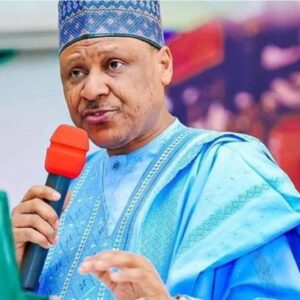
Alhaji Mohammed Idris