
By Rotimi Ijikanmi, News Agency of Nigeria (NAN)
The Federal Government’s 30-day petrol price intervention has reignited debate over fuel subsidy removal, economic reforms and efforts to provide immediate relief for Nigerians facing rising living costs.
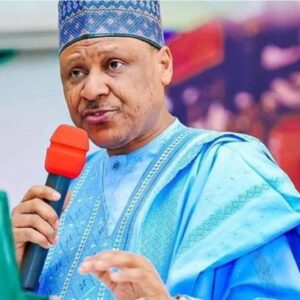
At a recent engagement with senior editors in Abuja, Minister of Information and National Orientation, Mohammed Idris, defended the intervention, insisting that it did not represent a return to the former subsidy regime.
Mr Bayo Onanuga, the Special Adviser to the President on Information and Strategy, accompanied the minister to provide insights into government programmes and policies.
The News Agency of Nigeria (NAN) recalls that the intervention was announced on Oct. 8 by Minister of Finance and Coordinating Minister of the Economy, Taiwo Oyedele.
The measure was introduced to cushion Nigerians against rising international petroleum prices.
Under the arrangement, the Nigerian National Petroleum Company Ltd. (NNPC) would temporarily forgo its petrol retail profit margin and sell fuel at cost for 30 days, prioritising public transport operators.
The Presidency said the measure was intended to protect vulnerable households from international oil price shocks without restoring the blanket subsidy abolished in 2023.
Idris told the editors that the decision followed consultations involving relevant government officials and NNPC executives, dismissing suggestions that it was a hurried response to economic pressure.
“The decision was not a knee-jerk response. Considerable thought, research and expert consultations went into it.
“The government could not have made such an announcement without extensive consultations.
“The NNPC was fully represented when the announcement was made by the Minister of Finance and Coordinating Minister of the Economy.
“The Minister of State for Petroleum Resources, the Group Managing Director of NNPC and the corporation’s executive directors were present,” he said.
Idris explained that geopolitical tensions involving Iran and the United States had affected international petroleum prices, prompting governments to consider measures to protect consumers.
He said the government would respond to changing international market conditions, suggesting that further adjustments would depend partly on developments affecting petroleum prices.
On his part, Onanuga reiterated that the discount was an NNPC initiative introduced to mark Nigeria’s 66th Independence Anniversary.
He said the corporation had introduced a discount of approximately N66 per litre, adding that the cost was manageable within its commercial operations.
“The discount is an NNPC initiative rather than a direct Federal Government fuel subsidy,” Onanuga said, distinguishing the arrangement from the previous subsidy regime.
Beyond petrol prices, the engagement highlighted tensions between the government’s economic recovery narrative and the hardships experienced by ordinary Nigerians.
Some editors questioned how the World Bank’s recent commendation of President Bola Tinubu’s economic reforms aligned with a United Nations report indicating widespread multidimensional poverty.
They asked whether government policies were producing positive results on paper while living conditions continued to deteriorate.
Responding, Idris said the latest World Bank update indicated that Nigeria’s economy grew by 4.2 per cent in the first half of 2026, compared with 3.9 per cent in 2025 and 3.5 per cent in 2024.
He said the figures suggested that the economy was experiencing gradual growth.
However, the minister acknowledged that economic growth did not mean Nigeria’s challenges had disappeared.
He said Tinubu’s reforms were intended to address structural weaknesses rather than perpetuate an unsustainable economic situation.
“For decades, Nigeria operated on a fragile economic foundation.
“The President concluded that the country could no longer continue on that path and that fundamental changes were necessary.
“These reforms have involved difficult decisions, but the objective is to establish a more sustainable economic foundation.”
Idris added that international rating agencies and investors were showing renewed interest in Nigeria.
According to him, the developments suggest that the country is making progress towards economic stability and prosperity.
“The government does not claim that all the problems have been solved.
“What it maintains is that the economy is moving towards recovery and that the reforms must be sustained,” Idris said.
In addition, Onanuga said responsibility for poverty reduction extended beyond the Federal Government to state and local governments, which oversaw important aspects of service delivery.
“The Federal Government, state governments and local governments all have responsibilities towards the people, and all should be held accountable for their performance.
“I encourage journalists to continue scrutinising all tiers of government,” he said.
Food affordability also emerged as a major concern, with Idris warning against hoarding and price manipulation that could prevent consumers from benefiting from improved agricultural supplies.
He said the Ministry of Agriculture and Food Security was managing reserves and releasing commodities when necessary, while urging traders to avoid practices that restricted access.
Labour relations also featured prominently following a two-week ultimatum issued by the Nigeria Labour Congress (NLC) over workers’ welfare and rising living costs.
“I believe a strike can be averted,” Idris said, expressing confidence that dialogue could resolve the dispute.
He said Tinubu supported more frequent wage reviews and that the government remained willing to engage organised labour.
On local government autonomy, Idris said a committee was addressing administrative and operational obstacles following the Supreme Court judgment on financial independence.
He maintained that implementation was ongoing and that bottlenecks preventing the full realisation of the judgment would be resolved.
Infrastructure development and youth inclusion also featured prominently, as Idris defended major road projects as long-term investments in national connectivity and economic growth.
He said eligible Nigerians could access government youth programmes regardless of political affiliation, stressing the importance of equal opportunities.
Idris explained that the government’s infrastructure programme was designed to improve connectivity, facilitate transportation and stimulate economic activities nationwide.
He dismissed claims that the government was neglecting existing roads while prioritising new projects with limited immediate benefits for residents.
The minister clarified that some projects under discussion were not entirely new, noting that certain roads were being developed through existing financing and tax-credit arrangements.
One of the major projects highlighted was the Lambata-Bida-Mokwa-Makera-
He added that other road projects had progressed through collaboration between the Federal Government, the Ministry of Works and state governments.
According to him, the projects form part of a broader economic strategy to connect communities, support businesses and expand economic opportunities.
He maintained that the projects should be assessed by their long-term developmental impact, including improved transportation, increased commercial activity and better access to economic opportunities.
The discussion also addressed press freedom following concerns about reported arrests of critics and restrictions on public expression.
Idris said he had never known Tinubu to order the arrest of journalists, promising to investigate specific cases while emphasising the importance of freedom of expression.
Speaking further, Onanuga emphasised the need for professionalism in the execution of journalistic responsibilities.
He said press freedom must be accompanied by responsibility, expressing concern over reports containing misleading headlines or inaccurate descriptions of events.
He cited a newspaper report with a headline suggesting that petrol prices had risen to approximately N1,900 per litre, although the accompanying story concerned diesel prices.
“I contacted the editor and pointed out that the headline did not accurately reflect the story.
“Correcting the body of a report is not always enough; when the headline is misleading, the headline itself must also be corrected.’’
Onanuga also cited a News Central video about queues for compressed natural gas (CNG), noting that its headline referred to petrol queues, although the report concerned CNG.
He said such errors could mislead the public and heighten tensions, urging editors to exercise greater care in discharging their responsibilities.
“Editors are gatekeepers and must exercise their responsibilities carefully.
“We should not publish material without checking its accuracy, especially when inaccurate reporting could cause unnecessary panic.
“Nigeria is our country, and our editorial decisions should reflect an understanding of our collective interests,” Onanuga said.
Ultimately, the Federal Government’s 30-day petrol price intervention highlights the delicate balance between sustaining economic reforms and providing immediate relief to Nigerians struggling with rising living costs.
Although the government insists the measure is not a subsidy, its effectiveness will depend on transparency, affordability, implementation and measurable improvements in citizens’ living conditions.
Beyond temporary interventions, analysts say sustainable recovery requires coordinated governance, accessible food, improved infrastructure, workers’ welfare and accountable leadership that translates economic growth into tangible benefits for ordinary Nigerians.